Understanding Your Nervous System Reactions
Neuroscience, Nervous System, Stress, Human Behaviour
Why We React Before We Think: Understanding Your Nervous System
Have you ever snapped at someone you care about, then wondered, “Why did I react like that?” Maybe your heart raced during a simple conversation, or you found it hard to relax even when nothing seemed obviously wrong. These moments can feel confusing, but they are not random. They are closely linked to how your nervous system works, how your brain processes possible threats and how stress shapes human behaviour over time.
Your Nervous System Is Always Listening
The nervous system is your body’s communication network. It connects the brain, spinal cord and nerves that reach into every organ and muscle. Even when you are resting, this system is constantly scanning your surroundings and your internal state. It tracks things like heart rate, breathing, temperature and muscle tension, and it helps you respond to what is happening around you.
A simple way to think about it is this: your nervous system is always asking, “Am I safe, or am I under threat?” When the answer feels closer to “threat,” your body prepares you to act quickly. This can be helpful in real danger, but in everyday life, it can also lead to reactions that feel stronger than the situation requires.
A Quick Tour of the Brain and Stress Response
Neuroscience gives us a helpful map for understanding this process. While the brain is highly complex, a few key parts are especially relevant to everyday stress and behaviour:
The amygdala helps detect possible threats. It reacts quickly, often before you are fully aware of what is happening.
The prefrontal cortex, behind your forehead, supports planning, reflection and thoughtful decision-making. This is the part that helps you pause and think things through.
The autonomic nervous system manages automatic functions like heart rate and breathing. It has two main branches: one that prepares you for action and one that supports rest and recovery.
When your amygdala senses a possible threat, it can send a fast signal to your body before your prefrontal cortex has time to fully evaluate the situation. This is one reason you may react before you feel like you have consciously chosen your response. Your nervous system is trying to protect you, even if the “threat” is only a sharp tone of voice or a stressful email.
How Stress Shows Up in Everyday Life
Stress is not only about major events. It can come from ongoing responsibilities, work schedules, relationship tensions, financial concerns or even a constant stream of notifications. Over time, repeated stress can keep your nervous system in a more activated state, even when nothing dangerous is happening in the moment.
You might notice this as difficulty sleeping, feeling “on edge,” being easily irritated or finding it hard to concentrate. Some people become more reactive and outspoken; others withdraw or shut down. Both are examples of human behaviour shaped by the nervous system’s attempt to cope with ongoing pressure.
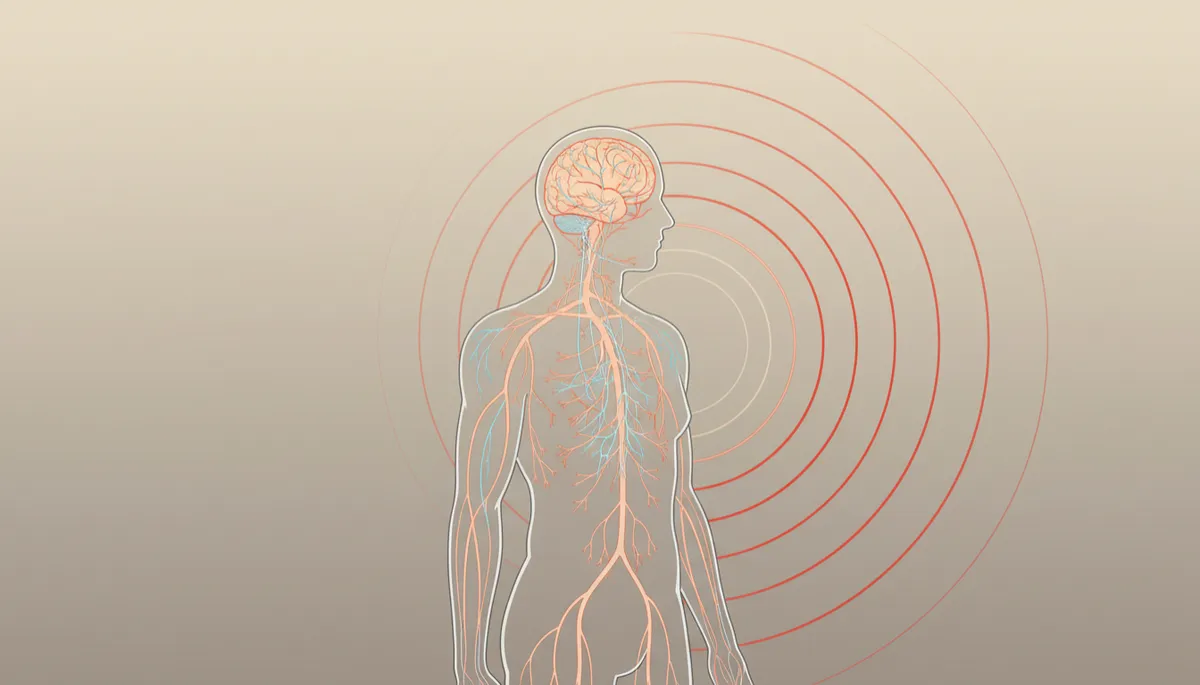
Long-term stress can keep the nervous system in a heightened state of alert.
Why Some Reactions Feel Automatic
Not every response is a conscious choice. Past experiences, current stress levels, sleep, nutrition and environment all influence how your brain interprets what is happening. If your nervous system has learned that certain tones, places or expressions may signal danger, it may react more quickly and strongly in those situations, even if you logically “know” you are safe.
This does not mean there is something wrong with you. It shows how deeply connected your brain, body and history are. Neuroscience helps us see that behaviour is not just about willpower. It is also about patterns that have developed over time in the nervous system itself.
Creating Space Between a Trigger and a Response
1. Notice Your Signals
Begin by paying attention to early signs of activation: a faster heartbeat, shallow breathing, tight shoulders or a sudden change in mood. These are clues that your nervous system is shifting into a more alert state. Simply naming what you notice—“My chest feels tight,” or “My jaw is clenched”—can be a first step toward responding with more awareness.
2. Make Time to Pause
A brief pause can give your prefrontal cortex more opportunity to engage. This might look like taking one slow breath before replying to a message, or stepping away from a heated conversation for a moment. You may not always be able to pause, but when you can, it can help you respond rather than react.
3. Gentle Practices to Support Your Nervous System
Many people find that small, regular practices help their nervous system return to a calmer state more easily. These may include:
Comfortable breathing exercises or gentle meditation
Walking, stretching or other forms of movement
Listening to music that feels grounding or soothing
Talking with someone you trust about what you are experiencing
💡 Reflection: There is no single technique that works for everyone. Exploring what supports your nervous system is a personal process, and small changes over time can be meaningful.
Neuroscience as a Lens for Self-Understanding
Understanding the brain and nervous system does not remove life’s challenges, but it can change how you relate to them. Instead of seeing every strong reaction as a personal failure, you can begin to view it as information: a signal that your system is trying to protect you, perhaps more intensely than the situation requires.
This perspective opens space for curiosity rather than judgment. It invites questions such as, “What might my nervous system be reacting to right now?” or “What would help me feel a little safer in this moment?” Over time, this kind of gentle attention can support more flexible, intentional behaviour.
A Different Way to Relate to Your Reactions
What if, instead of asking “What is wrong with me?”, you asked, “What is my nervous system trying to tell me?” This shift does not promise quick fixes, and it is not a replacement for professional support when needed. But it can be a meaningful starting point for understanding your own patterns with more kindness and clarity.
Exploring the links between neuroscience, stress, human behaviour, music and personal wellbeing is at the heart of Cameron Oates’ work. His approach invites you to see your brain and nervous system not as abstract concepts, but as living systems that shape how you move through everyday life.
Continue Exploring with Cameron Oates
Understanding your nervous system is not about controlling every reaction. It is about building a relationship with your own experience—one that allows a little more space, choice and compassion. Sometimes, meaningful change begins with something simple: pausing long enough to notice what is happening inside.
If you would like to explore these ideas further, you can:
Read more about the connection between music, the brain and emotional regulation on Cameron’s future Music & Mind articles (internal link suggestion: /music-and-the-brain).
Explore resources on nervous system awareness and everyday wellbeing (internal link suggestion: /nervous-system-regulation).
Learn more about Cameron’s work and projects at cameronoates.com (internal link suggestion: /about).
You do not need to have everything figured out. Beginning to understand why you react before you think can itself be a powerful step toward living with more awareness and care.
