Finding Your Unique Sound: Musical Expression Art
Music, Creative Expression, Live Performance
Finding a Unique Sound: The Art of Musical Expression
Discover how musicians shape their own sound, and how Cameron Oates blends guitar, pedals and didgeridoos into a distinctive musical experience.
What Does It Mean to Find Your Own Sound?
In a world filled with music, finding a unique musical sound is less about volume and more about identity. It is the process of turning personal stories, emotions and ideas into something listeners can feel and recognise. Two musicians can hold the same guitar, play the same chords and still sound completely different. The difference comes from touch, timing, tone and the choices they make about every note and texture.
Musicians develop this identity over time. They experiment with instruments, explore new sounds and pay attention to what feels honest. Some lean towards clean, simple arrangements. Others are drawn to layered, atmospheric soundscapes. In each case, the goal is not just to play music, but to express something real and personal through sound.
How Different Instruments Shape Musical Expression
Instruments are like voices. Each one carries its own character, range and emotional colour. When an artist chooses which instruments to bring into their music, they are also choosing how they want listeners to feel. A single acoustic guitar can create an intimate, reflective mood. A deep, resonant wind instrument can add a grounded, earthy presence. Percussion can shift the energy from calm to driving in just a few beats.
The art lies in how these voices are combined. Layering instruments allows musicians to build contrast and space. A warm guitar line can sit above a low, droning tone. Subtle rhythmic patterns can sit beneath a simple melody, gently guiding the listener forward. By choosing when each sound enters, and how long it stays, artists shape the emotional journey of a performance.
Cameron Oates: A Musical Journey Shaped by Change
For guitarist and songwriter Cameron Oates, music became part of his life in an unexpected way. In his early 20s, he was working as an air-conditioning mechanic when a back injury changed the direction of his career. During rehabilitation, he picked up a guitar and began writing songs, using music as a way to process the challenges he was facing.
What began as a response to a difficult season developed into a meaningful creative path. His songwriting draws on personal experiences and the ups and downs of life. Over time, his music has been described as deeply moving and spiritual, reflecting a sincere approach to musical expression rather than a focus on showmanship alone. Music became a way for Cameron to communicate what is often hard to say with words, and to connect with people on a more personal level.
Guitars, Pedals and Didgeridoos: Building a Distinctive Sound
One of the most distinctive aspects of Cameron’s live performances is the way he combines guitar, pedals and didgeridoos. This blend of familiar and less familiar instruments creates a sound that feels both grounded and expansive, modern yet deeply connected to natural tones and textures.
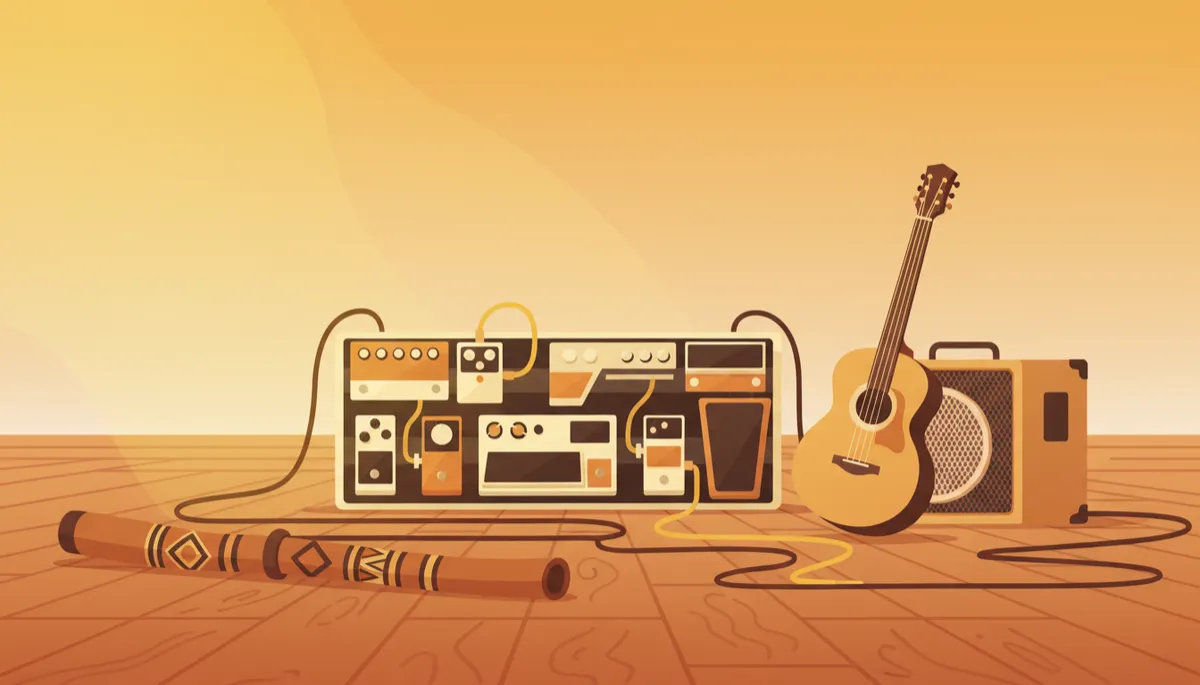
Layered instruments and effects help shape Cameron’s immersive live sound.
The Role of Guitar Pedals in Creative Sound
Guitar pedals play a key role in how Cameron shapes his tone. At a simple level, pedals are devices that sit between the guitar and the amplifier, changing the sound along the way. Yet their impact on musical expression can be significant. Some pedals add gentle echo, allowing notes to linger and overlap, creating a spacious, atmospheric feel. Others add warmth, depth or subtle movement, turning a single guitar line into a textured soundscape.
By adjusting how much of each effect is heard, musicians can move from clean and simple to rich and layered. This control lets Cameron respond to the room, the audience and the moment. A quiet passage might feature soft reverb and delicate picking, while a more intense section might use fuller tones and stronger effects to build energy. In this way, pedals become tools for emotion, not just technology.
The Depth and Presence of the Didgeridoo
Alongside the guitar, the didgeridoo adds a powerful, resonant layer to Cameron’s performances. Its deep, continuous tones create a strong sense of presence and can shift the entire atmosphere of a song. Where the guitar often carries melody and harmony, the didgeridoo introduces a different dimension, adding pulse, vibration and a grounded feel that listeners can almost sense physically as well as hear.
By bringing these elements together on stage, Cameron creates a space where familiar songwriting meets distinctive sound design. The result is a live experience where each instrument has a clear purpose, and where the combination of textures becomes part of his musical identity.
Creativity, Personal Expression and Musical Identity
At its core, musical expression is about honesty. Creativity is not only about new sounds; it is about choosing sounds that reflect who you are. Musicians develop their own voice by paying attention to what feels authentic, even when it does not follow a familiar path. This might mean writing songs from personal experience, choosing instruments that resonate on a deeper level, or performing in a way that prioritises connection over perfection.
Cameron’s approach shows how creativity and personal expression can guide musical choices. His journey from rehabilitation to the stage, his focus on heartfelt songwriting and his distinctive blend of guitar, pedals and didgeridoos all contribute to a sound that feels uniquely his. Listeners are invited into that story, not through explanations, but through the way each performance is shaped in the moment.
Discover Cameron Oates’ Distinctive Musical Approach
Finding a unique sound is an ongoing journey, not a single moment. For audiences, it offers a chance to experience music that feels personal, considered and alive. For Cameron Oates, that journey has turned a challenging chapter of life into a meaningful creative path, shaped by expressive guitar work, thoughtful use of pedals and the deep resonance of the didgeridoo.
If you are interested in distinctive live performances and authentic musical expression, take the time to explore Cameron’s work. You can learn more about his story, listen to his music and enquire about live performances by visiting cameronoates.com. Consider how his blend of instruments, textures and personal experience shapes the way you hear each song, and how it might inspire your own understanding of what a unique musical sound can be.
For further insight into his creative world, you may also explore other pages on his site, such as his music and performance information, to see how his distinctive approach comes to life on stage.
Curious about the connection between neuroscience, human behaviour and music? Explore Cameron's work, discover new perspectives, and connect with him today! Click here to find out more →