Music and Memory: How Songs Trigger Nostalgia
Neuroscience, Music, Human Behaviour
Why Music Takes Us Back: The Connection Between Songs and Memory
Explore how familiar songs can transport you to another time, and what this reveals about the way the brain links music, memory and emotion.
That Moment When a Song Stops You in Your Tracks
You are in a supermarket, a café or scrolling through a playlist when it happens. A song you have not heard in years begins to play. Within seconds, you are no longer fully in the present moment. Your mind drifts to a school dance, a late-night drive, a first job or a person you have not seen in a long time.
The air seems different. You remember details you had not thought about in years. The clothes you wore, the weather that day, the way you felt. Nothing around you has changed, yet the song has quietly opened a door in your memory.
This experience is common, but it is not random. Music has a special way of linking sound, memory and emotion. Understanding how this works can deepen the way we listen and help us appreciate why certain songs stay with us for life.
How Music Becomes a Cue for Memory
Our brains do not store memories as single files. Instead, each experience is made up of many details: sounds, sights, smells, thoughts and feelings. When something important happens, the brain links these details together so they can be recalled later as a connected event.
Music can become one of those details. If a song is playing during a meaningful moment, the brain may store the sound of the song alongside the people, place and emotions of that time. Later, when you hear the same song again, it can act as a cue, or trigger, that helps bring parts of that memory back into awareness.
This does not mean music can reliably recover every forgotten memory, and it does not work the same way for everyone. But for many people, songs become powerful reminders of particular life chapters, especially when those chapters were emotionally important or repeated often, like a favourite playlist during a certain year of life.
The Brain’s Music–Memory–Emotion Network
Several brain regions work together when we listen to music and recall memories. The auditory cortex helps us recognise sounds, pitch and rhythm. The hippocampus plays a key role in forming and retrieving memories of events. Nearby structures, including parts of the limbic system, help process emotion and assign meaning to what we experience.
When a familiar song plays, these areas can become active together. The brain does not just register the sound; it also checks, often automatically, for past experiences linked to that sound. If the song is tied to a strong emotional moment, the memory and the feeling may return side by side. This is one reason a melody can suddenly bring tears to your eyes or make you feel lighter, even if you were not thinking about that memory a moment before.
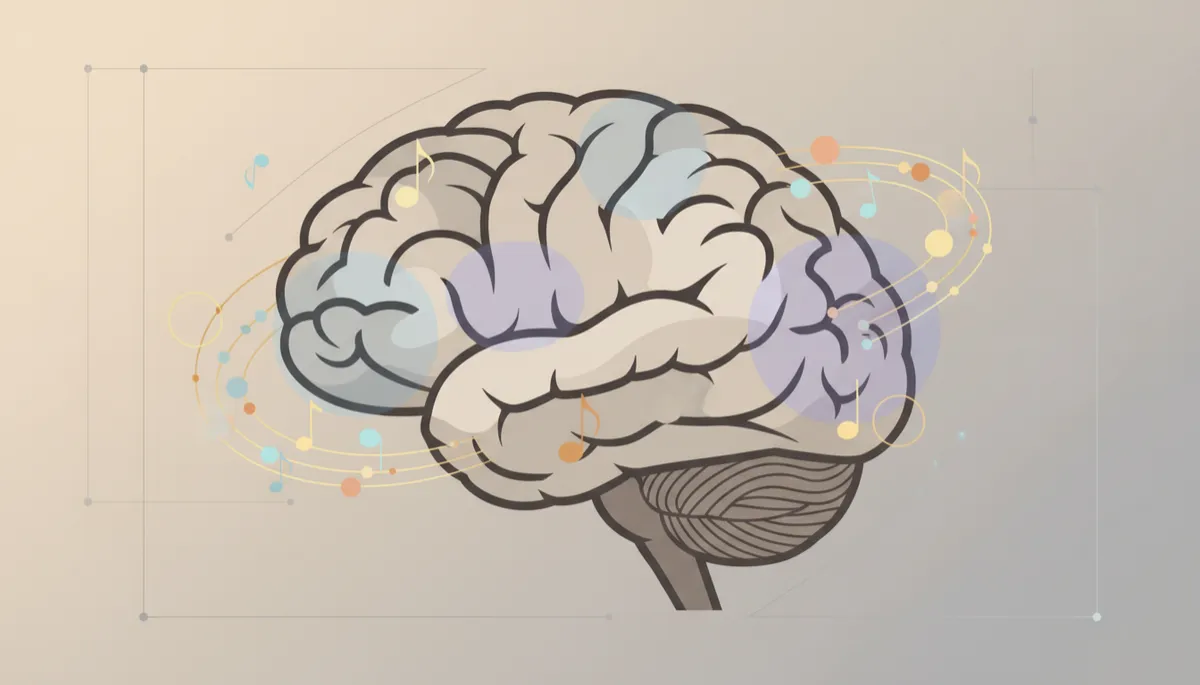
Music activates networks for sound, memory and emotion at the same time.
Why Certain Songs Attach to Life Moments
Not every song becomes a memory anchor. Some tracks fade quickly, while others feel tied to a specific moment forever. Several factors can help explain why particular songs stand out so strongly in our personal history.
Emotional intensity: Songs heard during emotionally charged events, such as celebrations, breakups or major life changes, are more likely to be remembered and linked with those moments.
Repetition: Tracks played again and again during a certain period, like a favourite album on repeat, can become a soundtrack to that chapter of life.
Personal meaning: Lyrics that seem to “speak for you,” or melodies that match how you feel, can make a song feel woven into your story rather than just playing in the background.
Over time, the song and the memory become linked so closely that it is hard to think of one without the other. The track that played during a graduation, a first dance or a quiet walk home may never sound neutral again. It carries your history inside it.
Why Music Makes Some Memories Feel So Vivid
Many people notice that music-linked memories can feel unusually clear, almost as if you are stepping back into the scene. One reason is that music does more than remind you of a fact. It can recreate a feeling. When the emotional parts of the brain are active, they can colour how a memory is experienced, making it feel richer and more present than a simple mental note such as “I used to live there” or “I once knew that person.”
Another reason is that music unfolds over time. As the melody moves forward, different parts of the song can call up different details. The first few notes may remind you of the room you were in. The chorus may bring back the people around you. A certain line of lyrics may recall what you were thinking or hoping for at the time. The song guides your attention through the memory, almost like walking through a familiar place and noticing new details each time.
This does not mean every memory triggered by music is accurate in every detail. Memories can change over time, and the brain sometimes fills gaps without us realising. Still, the emotional truth of the experience often remains strong, which is why a song can feel like a direct line to who you were at a certain point in your life.
Melodies, Lyrics and Rhythm: How Musicians Shape Our Inner World
Musicians may not always use scientific language, but many intuitively work with the same ingredients that shape memory and emotion in the brain. Melodies, lyrics and rhythm each play a role in how a song connects to our experience.
Melody: A clear, memorable melody gives the brain something to hold onto. Repeated phrases and small variations make it easier for us to recognise the tune later, which strengthens the link between the song and the moments we attach to it.
Lyrics: Words can mirror our thoughts, hopes and fears. When a lyric describes something we have felt but could not easily explain, it can become deeply personal. The song feels as though it is telling our story, even if it was written by someone we have never met.
Rhythm: Rhythm engages the body as well as the mind. We tap our feet, nod our heads or move with others. This physical involvement can make a musical moment more immersive, weaving the song into social experiences like dancing, concerts and shared celebrations.
Through these elements, musicians create soundscapes that our brains are quick to connect with memory and emotion. While not every song will become a personal landmark, the ones that do can stay with us for decades, resurfacing at unexpected times and offering a brief, powerful bridge between past and present.
Music, Memory and What It Means to Be Human
The science of music and memory shows how closely our brains tie sound to experience. Yet the deeper story is human. Songs hold our joys and losses, our ordinary days and turning points. They remind us who we were, who we are and sometimes who we hoped to become.
Next time an old favourite track catches you off guard, you might notice what your brain is quietly doing in the background: linking melody with memory, rhythm with feeling and sound with the story of your life. You do not need to know every neural pathway to appreciate the effect. Simply paying attention to how a song moves you can be a way of understanding yourself a little more clearly.
If you are curious about how music, the brain and human behaviour interact, exploring this connection further can be a meaningful journey. Each playlist, each memory and each emotion offers another clue to how deeply sound is woven into the way we experience the world.
Curious about the connection between neuroscience, human behaviour and music? Explore Cameron's work, discover new perspectives, and connect with him today! Click here to find out more →