The Power of Music: Boost Mindset & Brain Health
Neuroscience, Music, Mindset, Brain Health
The Incredible Power of Music: Mindset, Goals and Brain Health
Have you ever pressed play on a song and felt your whole state shift — from flat to focused, restless to calm, or uncertain to ready for the next step?
Many of us sense that music changes something inside us. Neuroscience is beginning to explain why. When we look at music through the lenses of mindset, goals, nervous system regulation and brain health, it becomes more than background noise. It becomes one of the tools we can use to shape our everyday experience — while recognising that each person responds in their own way.
How Music Talks to the Brain
When you listen to music, your brain does far more than simply detect sound. Different areas work together: the auditory cortex helps you process pitch and rhythm; memory networks link songs to past experiences; emotion-related regions, including parts of the limbic system, respond to changes in harmony, tension and release. Movement areas can also become active, which is why a strong beat can make you want to tap your foot or move your body.
Research suggests that music can influence the release of certain brain chemicals linked with reward, motivation and bonding. For some people, this may translate into feeling more uplifted, connected or ready to take action. For others, the same song might have little effect. The style of music, your history with it and the situation you are in all play a role in how your brain responds.
Mood, Emotion and Motivation: Why Songs Feel Different
Mood and motivation are shaped by both biology and context. Music can interact with this system in several ways. A fast tempo and strong rhythm may help some people feel more energised, which can be useful before exercise or when starting a demanding task. Slower, more predictable music may feel soothing and support a sense of ease for others, especially in quieter moments of the day.
Importantly, music is not a switch that “fixes” a mood. It is more like a gentle nudge. Choosing music that matches or slightly shifts how you already feel can support you in moving through emotions rather than avoiding them. A reflective piece may help you sit with a difficult feeling. A hopeful song might make it a little easier to take the next step toward something that matters to you.
Mindset, Goals and the Stories We Tell Ourselves
Mindset is the lens through which we interpret our experiences. It shapes the stories we tell ourselves about what is possible, what we deserve and how we respond when things do not go to plan. When we set goals, we are not only deciding what we want to do; we are also deciding who we are willing to become in the process of working towards them.
A meaningful goal is usually connected to values — the deeper reasons something matters. Music can support this process in subtle ways. A certain song might become linked with a time you overcame difficulty, reminding you that growth is possible. A calm playlist may help you pause and think clearly before making an important decision. Used intentionally, music can act as a cue: “Now I am focusing, now I am reflecting, now I am winding down.”
Simple Goal-Setting Questions to Explore
What do I want to move towards in the next three months?
Why does this matter to me beyond achievement or status?
What is one small, repeatable action I can take this week?
You might choose a specific song or playlist to accompany that weekly action, helping your brain associate the music with focused effort over time.
The Nervous System: Why Your State Matters
Your nervous system is the body’s communication network. It helps regulate heart rate, breathing, digestion and how you react to stress. When you sense a challenge, your body may shift into a more alert state: your heart beats faster, your muscles prepare for action and your attention narrows. At other times, your system leans towards rest, repair and social connection.
Music can interact with this system, but not in a one-size-fits-all way. Softer, slower pieces may support a sense of relaxation for some people, while others feel more settled with gentle rhythmic patterns or familiar songs. More intense music can increase energy and alertness, which might be helpful before movement or unhelpful when you are trying to sleep. Paying attention to your own responses is key.

Noticing how different sounds affect your state is a practical first step.
Music, Focus and Everyday Brain Health Habits
Brain health is influenced by many daily habits: consistent sleep, movement, nutrition, meaningful relationships, learning and managing stress. Music can sit alongside these as one element of a supportive routine, rather than a replacement for them. Learning an instrument or engaging deeply with music can challenge attention, memory and coordination, which may benefit the brain over time.
For focus, some people find that instrumental or familiar tracks help reduce distractions by gently occupying part of their attention. Others concentrate better in silence. There is no universal rule. Experimenting with different types of music — and noticing whether your concentration improves, stays the same or declines — can help you design an environment that supports your goals without forcing a particular method.
Practical Ways to Use Music Intentionally
Morning reset: Choose one track that helps you feel grounded. Listen without multitasking for a few minutes before checking your phone or email.
Focus block: Test a 25-minute work session with gentle, non-lyrical music. Compare it with a silent session and notice the difference.
Evening unwind: Create a short playlist that signals the end of the day. Let it accompany a simple habit such as stretching or journaling.
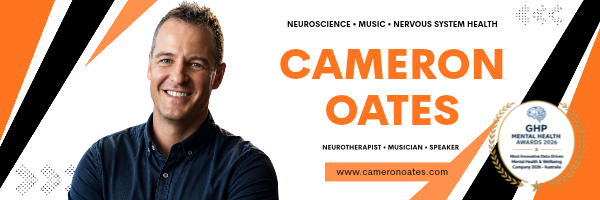
Cameron Oates: When Music Becomes a New Direction
For Cameron Oates, the connection between music, mindset and the brain is not theoretical. In his early 20s, a back injury changed the course of his work as an air-conditioning mechanic. During rehabilitation, he picked up a guitar and began exploring sound as a way to process his experience and express what words could not easily capture.
Over time, this personal exploration grew into a deeper interest in neuroscience, human behaviour and wellbeing. Cameron’s work now weaves together questions about how we think, feel and adapt with his ongoing musical journey. Rather than presenting music as a quick fix, he invites people to notice their own responses and use sound as one part of a broader approach to self-understanding.
On cameronoates.com, you can explore his music, read more about his perspective on the brain and human behaviour, and learn about speaking and collaboration opportunities that bring these themes to life.
Reflecting on Your Own Relationship with Music
Music will not solve every challenge, and it is not a substitute for professional support when it is needed. Yet it can offer a practical way to pause, notice your internal state and choose how you want to move forward. By paying attention to how different sounds affect your mood, motivation and nervous system, you begin to gather your own data about what supports you best.
You might ask yourself:
Which songs help me feel more steady or present?
What do I listen to when I want to avoid something, and what do I listen to when I am ready to engage with it?
How could I use music more intentionally to support the goals and habits that matter to me?
The power of music for the brain and nervous system lies not only in the science, but in the way each person chooses to listen, create and respond. When we combine evidence-informed understanding with personal reflection, music becomes a way to explore who we are, how we cope and where we want to go next.
To dive deeper into these ideas and discover Cameron’s work at the intersection of neuroscience, music and human behaviour, visit cameronoates.com.
Curious about the connection between neuroscience, human behaviour and music? Explore Cameron's work, discover new perspectives, and connect with him today! Click here to find out more →